
**Search Engine Optimization in Digital Marketing** is essential for businesses that want to build a strong online presence in today’s digital world.
However, simply creating a website does not guarantee that potential customers will find it. Businesses need effective strategies to improve their visibility in search engines and attract relevant visitors. This is where search engine optimization (SEO) plays an important role in digital marketing.
Search engine optimization helps businesses improve their presence and visibility in organic search results. By improving website content, technical features, and overall online presence, businesses can help search engines understand their webpages more effectively while making it easier for users to find relevant and useful information.
In this guide, we will explore what search engine optimization is, why it is important in digital marketing, its key components, and some practical SEO techniques businesses can use to improve their online presence.
What Is Search Engine Optimization?
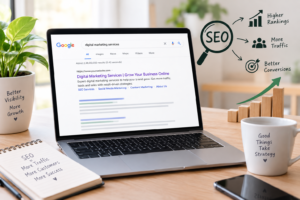
**Search engine opti+mization**, commonly known as SEO, is the process of improving a website to increase its visibility in search engine results for relevant queries. **Search engine optimisation** helps businesses improve their online presence and make their websites easier for search engines and users to discover.
When people search for information, products, or services online, search engines analyze numerous factors to determine which pages are most relevant and useful. **Search engine optimisation** enables businesses to improve their websites so search engines can understand their content more clearly and users can easily discover relevant and useful information.
For example, if someone searches for “digital marketing services,” a digital marketing agency can use **search engine optimisation** techniques to improve the chances of its relevant web pages appearing in organic search results.
**Search engine optimisation** involves various practices, including creating useful content, optimizing website pages, improving site structure, targeting relevant search terms, and providing a better user experience. When these elements work together, businesses can improve their chances of reaching potential customers through search engines.
SEO is generally focused on **organic traffic**, which means visitors who reach a website through unpaid search results. By implementing effective **search engine optimisation** strategies, businesses can attract relevant visitors, strengthen their online visibility, and build sustainable organic traffic over time.
Key Benefits of Search Engine Optimization in Digital Marketing
**Search Engine Optimization in Digital Marketing** plays a vital role in helping businesses, products, and services become more visible in search engine results and making it easier for people to find relevant information online. Effective **search engine optimisation** can help businesses improve their visibility and connect with people who are actively searching for relevant information. Understanding **Search Engine Optimization in Digital Marketing** helps businesses build a stronger online presence.
Some key benefits of SEO include:
Increased Online Visibility
Search engine optimisation improves a website’s content and structure, helping search engines understand its pages and rank them for relevant searches. This is one of the main advantages of Search Engine Optimization in Digital Marketing, helping businesses improve their online presence and connect with the right audience.
More Organic Traffic
SEO can help attract visitors without requiring businesses to pay for every individual click. When a website ranks for relevant search queries, it can attract organic visitors who are genuinely interested in the information, products, or services it offers. **Search Engine Optimization in Digital Marketing** helps businesses reach these audiences through relevant search results.
Better User Experience
Many SEO strategies also contribute to creating a better and more user-friendly website experience.
Clear navigation, useful content, mobile-friendly pages, fast loading times, and well-structured information can make it easier for users to find what they need. These improvements are also important components of effective **search engine optimisation**. They are valuable parts of **Search Engine Optimization in Digital Marketing** because they help both users and search engines understand website content.
Brand Awareness
Regularly appearing in relevant search results can help increase brand recognition and make a business more familiar to potential customers. Maintaining a strong presence in search results can also support long-term online visibility. With consistent **Search Engine Optimization in Digital Marketing**, businesses can improve their opportunities to reach new audiences.
Long-Term Marketing Value
Unlike paid advertising, which may stop generating traffic when the budget runs out, SEO can continue attracting organic visitors as long as the website’s content remains relevant, accessible, and valuable to users. competitive in search results. A consistent **search engine optimisation** strategy can therefore provide lasting value by supporting sustainable organic traffic and online visibility.
Overall, **Search Engine Optimization in Digital Marketing** can support long-term business growth by improving search visibility, attracting relevant visitors, enhancing user experience, and strengthening brand awareness. Businesses that invest in useful content and ongoing SEO improvements can build a more sustainable online presence.
Key Components of Search Engine Optimization
SEO involves several different areas. A successful strategy usually combines on-page, off-page, technical, and local SEO activities.
On-Page SEO
On-page SEO involves improving various website elements to make web pages more informative, user-friendly, and easier for search engines to understand.
Important on-page SEO elements include:
- Page titles
- Headings
- Keywords
- Meta descriptions
- Website content
- Internal links
- Image optimization
- URL structure
The aim is not to overuse keywords throughout the content, but to incorporate them naturally and meaningfully. Instead, businesses should create relevant, helpful content that naturally addresses the needs and questions of their target audience.
For example, a company offering web design services could create a detailed page explaining its services, process, pricing factors, and frequently asked questions. This approach helps users gain a clear understanding of the service while giving search engines relevant information about the page.
Keyword Research
Keyword research is a key element of SEO that involves finding the words and phrases users enter into search engines when looking for information, products, or services.
Keywords can be divided into several categories based on their purpose and search intent, such as:
- Short-tail keywords
- Long-tail keywords
- Informational keywords
- Commercial keywords
- Transactional keywords
- Local keywords
For instance, “SEO” is a broad search term, whereas “SEO techniques for small businesses” is a more specific and targeted keyword phrase.
Businesses should take search intent into account when choosing the most relevant keywords for their content. Understanding why someone is searching can help marketers create content that better matches the user’s needs.
Content Optimization

Creating high-quality content is a key element of an effective SEO strategy.Since search engines strive to deliver relevant and helpful results to users, businesses should create informative content that addresses their audience’s needs and
provides genuine value.
SEO-friendly content can include:
- Blog posts
- Service pages
- Product descriptions
- Tutorials
- Guides
- Case studies
- Frequently asked questions
- Videos
- Infographics
Effective content should be unique, informative, easy to understand, and tailored to the needs and interests of the target audience.
Technical SEO
Technical SEO involves optimizing a website’s technical elements to help search engines crawl, interpret, and index its pages more efficiently.
Technical SEO can include:
- Improving website loading speed
- Ensuring mobile usability
- Creating a logical site structure
- Fixing broken links
- Managing redirects
- Improving website security
- Creating XML sitemaps
- Using structured data where appropriate
- Addressing indexing issues
A well-structured and technically optimized website helps search engines discover, crawl, and process its pages more efficiently.
Off-Page SEO
Off-page SEO involves activities outside the website that can contribute to its online reputation and authority.
One well-known aspect of off-page SEO is link building. When reputable and relevant websites link to useful content, those links can contribute to a website’s authority and visibility.
Other off-page activities can include:
- Digital PR
- Brand mentions
- Content promotion
- Industry partnerships
- Relevant business listings
Businesses should focus on earning links and mentions naturally through valuable content and legitimate promotional activities rather than using manipulative link-building practices.
Local SEO
Local SEO is especially beneficial for businesses that target customers within specific locations or geographic regions.
For example, restaurants, salons, healthcare providers, repair services, and local retailers can use local SEO to improve their visibility for location-based searches.
Important local SEO activities include:
- Maintaining an accurate Google Business Profile
- Using consistent business information
- Collecting genuine customer reviews
- Creating location-specific content
- Optimizing local landing pages
- Building relevant local citations
Local SEO can help businesses connect with potential customers searching for nearby products and services.
Mobile SEO
A large number of users access websites through mobile devices. Therefore, businesses need to ensure that their websites provide a smooth experience on smartphones and tablets.
Mobile SEO involves making sure that:
- Pages display correctly on smaller screens
- Text is easy to read
- Buttons are easy to use
- Navigation is simple
- Pages load efficiently
- Important content is accessible
A mobile-friendly website can provide a better experience for visitors and support overall search visibility.
Internal Linking
Internal linking involves linking one page on a website to another page on the same website.
For example, a blog post about SEO basics could link to another article about keyword research or technical SEO.
Internal links can help:
- Users discover related content
- Search engines understand website structure
- Visitors navigate between relevant pages
- Distribute internal authority across pages
A logical internal linking structure can make a website easier to navigate and understand.
Measuring SEO Performance
SEO requires ongoing monitoring and improvement. Businesses can use analytics and search performance tools to understand how their websites are performing.
Important SEO metrics can include:
- Organic traffic
- Search impressions
- Click-through rate
- Keyword rankings
- Conversions
- Engagement
- Indexed pages
- Backlinks
These metrics can help marketers identify which pages are attracting visitors and which areas may require improvement.
For example, a page may receive a large number of search impressions but relatively few clicks. Improving its title or search-result description may help make the listing more appealing to users.
Common SEO Mistakes to Avoid
Businesses can sometimes make SEO mistakes that limit their website’s performance. Some common issues include:
Keyword Stuffing
Using the same keyword excessively can make content difficult to read and may create a poor user experience. Keywords should be incorporated naturally where they are relevant.
Creating Low-Quality Content
Publishing large amounts of content without providing useful information can make a website less valuable to visitors. Quality and relevance should remain priorities.
Ignoring Mobile Users
A website that works poorly on mobile devices can frustrate visitors and reduce engagement.
Neglecting Technical Issues
Broken links, slow pages, indexing problems, and poor site structure can affect how users and search engines interact with a website.
Buying Low-Quality Backlinks
Using manipulative or low-quality link-building methods can create SEO risks. Businesses should prioritize relevant, trustworthy, and naturally earned links.
Steps to Build an Effective SEO Strategy
A practical SEO strategy can begin with understanding the business’s goals and target audience.
Businesses can follow these steps:
- Define clear SEO goals.
- Identify the target audience.
- Conduct keyword research.
- Analyze relevant search intent.
- Audit the existing website.
- Improve on-page content.
- Address technical SEO issues.
- Create useful and relevant content.
- Develop legitimate link and brand-building activities.
- Monitor performance and make regular improvements.
SEO is not a one-time activity. Search behavior, competition, technology, and website content can change over time. Regular monitoring allows businesses to adapt their strategies as needed.
SEO vs. Paid Search Advertising
SEO and paid search advertising are both useful digital marketing techniques, but they work differently.
SEO focuses on improving **organic search visibility**, while paid search advertising involves paying to display advertisements in search results.
Paid advertising can provide visibility quickly, while SEO generally requires ongoing effort to build and maintain organic visibility. Businesses can incorporate both methods into a comprehensive digital marketing strategy to achieve their marketing objectives.
For example, a business might use paid advertising to promote a new service while simultaneously developing SEO content to build long-term organic visibility.
How SEO Contributes to Business Growth
Search Engine Optimization in Digital Marketing supports different stages of the customer journey. Informational content helps people discover a business, while educational resources build awareness and service or product pages help users compare their options. 
When Search Engine Optimization in Digital Marketing is combined with content marketing, social media, email marketing, paid advertising, and conversion optimization, it becomes part of a more effective digital marketing strategy.
The main goal of Search Engine Optimization in Digital Marketing is to align SEO efforts with business objectives rather than focusing only on search rankings.
By using Search Engine Optimization in Digital Marketing strategically, businesses can improve their online visibility, attract relevant visitors, and work toward long-term growth.
Conclusion
**Search engine optimization in digital marketing** is a valuable strategy for businesses that want to improve their online visibility and attract relevant organic traffic. From keyword research and content optimization to technical SEO, local SEO, and internal linking, SEO involves multiple activities that work together to improve a website’s overall search presence.
A successful SEO strategy is not about manipulating search engines or simply adding keywords to web pages. It is about creating useful content, providing a positive user experience, maintaining a technically sound website, and building a trustworthy online presence.
By regularly tracking performance and optimizing their websites according to user needs and search trends, businesses can make SEO a valuable part oftheir long-term digital marketing strategy.
Author: Anupama Sree